
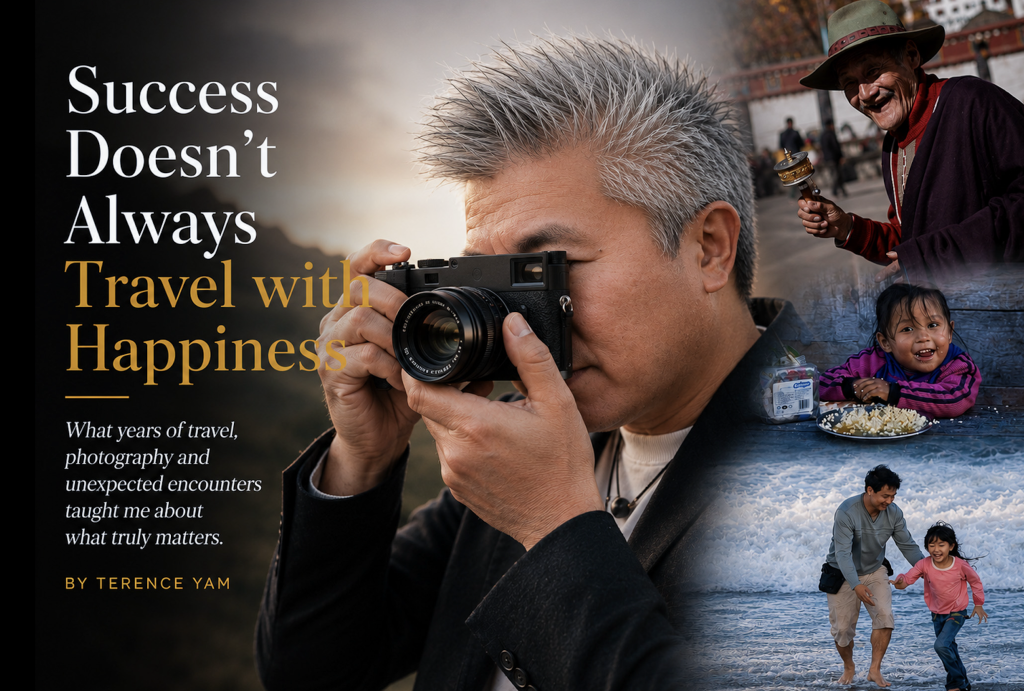
There is so much recently that has inspired me.
I am loving watching the World Cup and how the “beautiful game” has united people in the US, Canada and Mexico. More on that in next month’s Monday Morning Mojo. I appreciate the very short history we have in the United States and am in awe of the forefathers of the US and their long-term vision for life, liberty and the pursuit of happiness. Happy 250th America! And, I loved my travels through Asia last month with Lisa visiting family, friends and former colleagues. During my Asia visit I also appreciated meeting a very special man, Terence Yam, who is a PR professional from Hong Kong. Terence told me a story about what truly inspires him, and showed me photographs of what he discovered through photography. Terence explains this in this very generous guest post. Thank you Terence, and Monday Morning Mojo friends I believe you will enjoy Terence’s perspective.
Success Doesn’t Always Travel with Happiness
By Terence Yam
For years, I thought success and happiness travelled together.
Like many people in the communications profession, I built my career in an industry where expectations are high and the margin for error is incredibly small. We anticipate problems before they happen, chase perfection and celebrate results. Over time, those habits become part of who we are. We don’t just apply them to our clients—we unknowingly apply them to our own lives.
It’s a mindset that helps us build successful careers.
But I’ve come to realise that professional success and a meaningful life are not measured by the same scorecard.
For a long time, I believed happiness would arrive with the next achievement. Another promotion. A bigger client. Another milestone. I kept moving, convinced happiness would eventually catch up.
Then, more than twenty years ago, I picked up a camera.
At first, it was simply something to bring along on my travels. I wanted to capture beautiful places. Instead, the camera quietly taught me to notice beautiful people and precious moments.
People often ask me which country has been my favourite. Honestly, I rarely answer with a place.
I remember faces and stories:
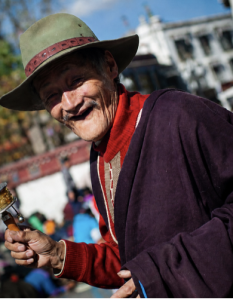
An elderly Tibetan gentleman whose smile was warmer than the morning sun.
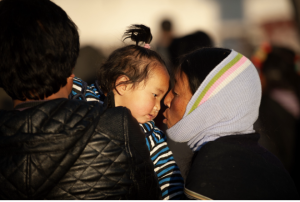
A grandmother gently kissing her grandson, completely unaware that anyone was watching.
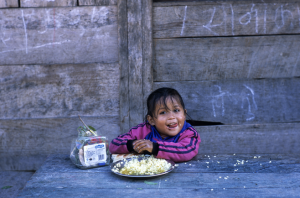
A little girl in Nepal eating plain porridge from a metal plate as if she had just been given the greatest feast on earth.
A father chasing his daughter along the shoreline, both laughing as the waves chased them back.
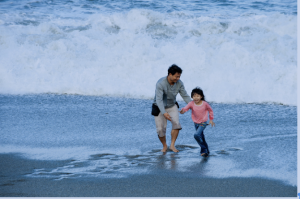
None of these photographs were planned.
None of them won awards.
Yet they have stayed with me far longer than any landscape I have ever photographed.
Somewhere along the journey, photography stopped being about photography.
Photography became my way of connecting with the world.
I don’t speak Tibetan or Nepalese, yet a smile, a camera and genuine curiosity somehow became enough. People invited me into conversations, into their homes and into moments no travel guide could ever promise.
Looking back, I realised I wasn’t simply photographing people.
Every conversation, every smile and every unexpected encounter was quietly reshaping the way I saw the world.
Without realising it, they were teaching me to appreciate what I already had instead of constantly chasing what I didn’t.
They weren’t just appearing in my photographs.
They were quietly changing me.
One question stayed with me after every journey.
Why did some of the happiest people I met seem to need the least?
For years, I had measured success the way many of us in communications do—through growth, numbers, recognition and achievement.
Don’t get me wrong—ambition isn’t a bad thing. It has opened doors I could never have imagined.
But somewhere between boardrooms and mountain villages, I began to realise that success and happiness don’t always travel together.
That thought stayed with me for years until one evening, while editing photographs, another idea quietly appeared.
Photography, I realised, is an art of deduction.
Every photograph begins by deciding what doesn’t belong.
We step closer,
wait longer,
change angles
and remove distractions
until only the story remains.
Perhaps happiness works the same way.
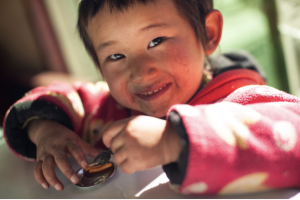
Maybe happiness isn’t about adding more.
Maybe it’s about removing what prevents us from seeing what is already there.
Comparison.
Ego.
The pressure to keep up.
The endless pursuit of “more.”
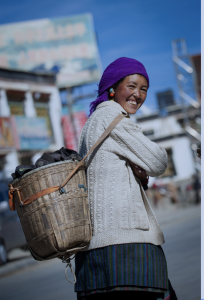
When those distractions slowly fade, what comes into focus is surprisingly simple.
Family.
Friendship.
Kindness.
Purpose.
Connection.
Perhaps that’s why the happiest people I met were not necessarily the richest. They simply seemed to appreciate what they already had.
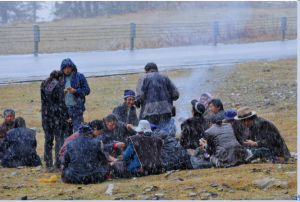
That lesson eventually followed me home.
After more than twenty years in communications, I found myself asking different questions. Instead of simply helping organisations tell better stories, I became more interested in helping them create stories worth telling. Today, the work I choose is guided by the same question my camera taught me years ago:
What truly matters?
That question has shaped my business far more than any business plan ever did.
People often assume my exhibition, Simple Happiness, is about travel or photography.
It isn’t.
It’s a reminder—to myself more than anyone else—that happiness rarely arrives with applause, promotions or possessions.
More often, it arrives quietly.
I’ve come to believe that happiness isn’t something we discover by travelling farther, earning more or becoming more successful.
It begins the moment we stop measuring our lives by someone else’s definition of success and start paying attention to our own.
For me, photography simply became a way of practising that perspective.
It taught me to slow down.
To observe.
To remove distractions.
To notice what most of us are simply too busy to see.
Ironically, I travelled around the world searching for extraordinary moments, only to realise that happiness had been hiding inside the ordinary all along.
I still believe in building great work.
I still believe in ambition.
But today, I no longer confuse success with happiness.
If there’s one lesson these journeys have taught me, it is this:
Happiness isn’t about what we have.
It’s about how we choose to see the world around us.
I hope you enjoyed Terence’s perspective. Thank you all for being part of this community and have a great summer month ahead.



Absolutely LOVE THIS Monday morning Mojo today Scott.. LOVED the photographs, and most imported how it inspired his new philosophy of life. It’s not about how much one has, it’s about appreciating what one already has, and continue to appreciate everything on a day to day existence..👍♥️♥️
Thank you Scott for sharing this. After reading this, it made me think, look around, remember, what was, think about what is, possibly what will be – – – it made me appreciate life as it was and is, and all that surrounds me.
Love this!
“Happiness isn’t about what we have.
It’s about how we choose to see the world around us.“
I’m not fully sure… I understand the peacefulness of Terence Yam but I think so.
How beautiful. Really makes another communications professional reflect! Joy makes the world go ’round. – Jackie
I totally agree with the point that happiness and success don’t always go together. The road you travel for one doesn’t necessarily reach the other. Of the two happiness is the better achievement because you can be happy wether you’re successful or not. For happiness is independent of others while success depends on how others see you.
As for photography I resisted the urge for the longest time. Then on a surfing trip to Baja California with my friend John Durant he loaded up his spare camera handed it to me and urged me to take some photos. I did. Since that day I often accompanied him on photo shoots as he built his career as a professional photographer in San Diego. I became his assistant and eventually office manager. I eventually began to take photo assignments on my own with John’s encouragement and support. A few years into it I realized that though I could take a technically “good” photo in or out of the studio there was something that didn’t sit well with me. I quit the employment part of our relationship. We remained close friends. John is my daughter’s godfather.
Since then I went back to my avoiding photography under most circumstances finally figuring the reason for my reluctance: the presence of a camera totally changes the situation. It dominates the environment. That’s what bothered me. As you set up for a photo the emotional temperature of the room changes. What was once a friendly gaze becomes one of suspicion, even fear. A candid moment becomes a fake pose. Instead of relating to people around me I’d be recording them. I can’t do that. I totally admire people who can.
Photography requires skill, patience, and a keen eye to recognize a worthy subject. I realized that for me being part of the scene was better for me.
Anyway that’s what I figured out.
Very inspiring thx Scott for sharing !